
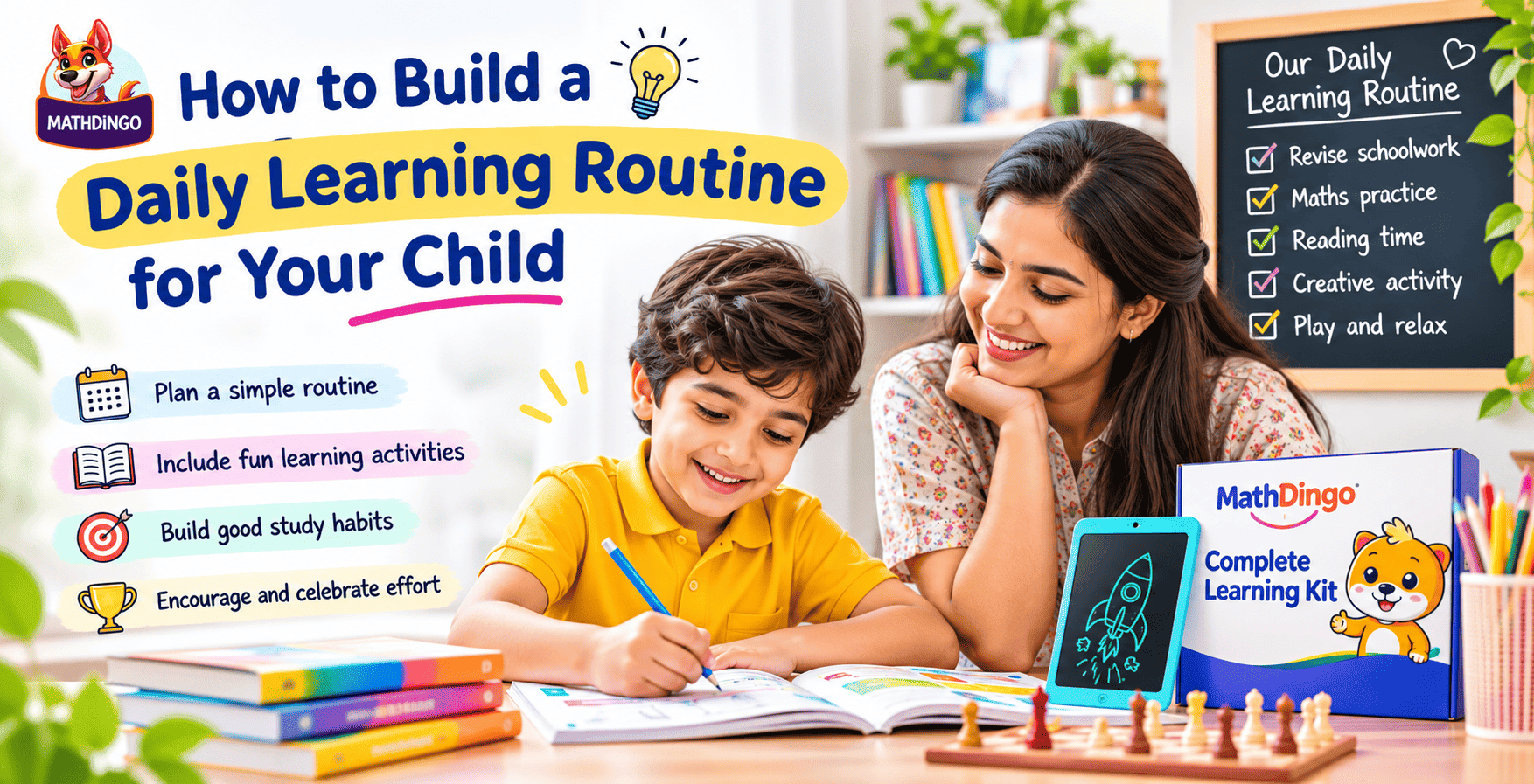
Getting children to sit down and study every day isn’t always easy. Some days they are excited to open their books, while on other days, even a little homework can turn into a struggle. Between school, playtime, screen time and family commitments, finding a balance can be tricky for parents.
This is where a simple daily learning routine can help. Children don’t need to spend hours studying after school. What they need is a little time each day to practise, explore new ideas and enjoy learning.
A well-planned routine can make this easier. Here are some practical ways to build a daily learning routine for your child without making every day feel like a school day.
9 Practical Ways to Build a Daily Learning Routine for Your Child
1. Start by Understanding Your Child
Before preparing a timetable, think about how your child likes to learn. Does your child enjoy reading stories, solving puzzles or playing number games? Are there particular subjects that need a little more attention?
Every child has different interests and learning needs. For example, a child who finds maths difficult might enjoy practising with toys or everyday objects rather than completing several sums in a notebook.
Spend a few days noticing what works. This will help you create a routine that feels natural for your child.
2. Choose a Regular Time for Learning
Children usually settle into routines more easily when they know what comes next. Try to set aside a regular time for learning at home.
You could begin after your child has returned from school, enjoyed a snack and had some time to relax. Avoid asking them to start studying the moment they walk through the door.
You don’t have to get the timing perfect from day one. Find a time that works for your family and try to follow it consistently.
3. Prepare a Simple Daily Study Timetable
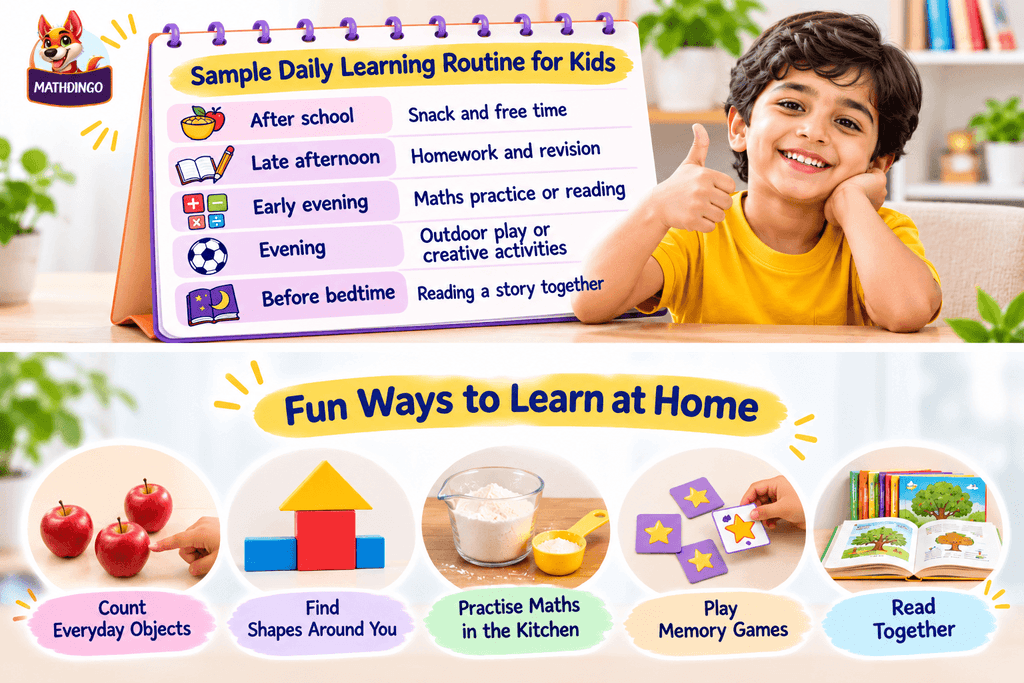
A study timetable for kids doesn’t need to be complicated. In fact, a schedule with too many activities can make children lose interest.
Start with a few activities and leave enough time for play and rest. Here’s an example you can adapt.
| Time | Activity |
| After school | Snack and free time |
| Late afternoon | Homework and revision |
| Early evening | Maths practice or reading |
| Evening | Outdoor play or creative activities |
| Before bedtime | Reading a story together |
Think of this as a flexible guide, not a set of rules. Your child’s school timings, energy levels and interests should determine the final schedule.
4. Make Learning Fun with Everyday Activities
One of the easiest ways to encourage children to learn is to connect lessons with things they already enjoy. You don’t always need special books or learning materials. Try a few simple activities at home:
- Count together: Ask your child to count fruits while arranging them in a basket.
- Look for shapes: Find circles, squares and rectangles in household objects.
- Practise maths in the kitchen: Count ingredients or measure quantities while preparing a meal.
- Play memory games: Use matching cards or simple puzzles.
- Read together: Choose a short story and ask your child what they liked about it.
These daily learning activities for kids at home make practice feel less like homework. They also give children opportunities to use what they learn in everyday situations. If you’re looking for more ideas, explore these easy math activities for kids at home to help your child practise maths through simple, everyday experiences.
5. Set Up a Small Learning Corner
A separate study room isn’t necessary. Even a small corner with a table, chair and a few learning materials can become a comfortable place to study.
Keep your child’s books, pencils, flashcards and activity sheets organised. Try to keep television and mobile phones away during learning time.
You can also let your child arrange the space. Children often enjoy having a little responsibility, especially when they get to choose where their favourite books and activities go.
6. Give Your Child Opportunities to Learn Independently
It’s natural to want to help whenever your child gets stuck. But try not to provide every answer immediately.
If your child is solving a puzzle or completing a maths activity, give them a little time to figure it out. Offer a hint if needed, and appreciate the effort they make.
You can also encourage small independent tasks, such as choosing a book, arranging flashcards or preparing stationery before a learning session.
These simple habits can help children become more confident and responsible learners.
7. Choose Learning Resources That Keep Children Interested
Sometimes, having a variety of learning materials makes daily practice easier to organise. Workbooks can be useful for structured practice, while flashcards offer a quick way to revise numbers and concepts. Educational games and reusable writing tools add another dimension to learning.
For parents looking for different maths learning resources in one place, the MathDingo Complete Learning Kit includes two workbooks, flashcards, 16 stickers, an LCD Writing Panel, Memory Chess, Edu Roller and three months of free app access.
You can introduce different activities throughout the week instead of using everything in one sitting. This gives children some variety while keeping their learning routine manageable.
8. Appreciate Effort, Not Just Correct Answers
Children need encouragement while developing new learning habits. If your child finishes a reading session, tries a difficult puzzle or remembers to follow the routine, acknowledge the effort.
A simple compliment, sticker or favourite family activity can make a child feel proud of their progress.
Avoid comparing your child with classmates or siblings. Learning takes time, and every child moves at a different pace.
9. Don’t Worry When the Routine Changes
There will be days when homework takes longer, family plans change or your child simply feels tired. That’s normal.
Don’t turn a missed learning session into an argument. Shorten the activity, choose something lighter or take a break when necessary.
A daily routine should make family life easier, not create another reason for stress. Being flexible is just as important as being consistent.
FAQ
Start by choosing a regular time for learning. Include homework, reading, maths practice and playful activities. Keep the schedule simple and adjust it according to your child’s needs.
There isn’t one fixed duration for every child. It depends on age, attention span and school workload. Short, focused learning sessions with breaks can be a good starting point.
Choose a time when your child is rested and comfortable. For many families, this may be after school, a snack and some relaxation.
Try storytelling, puzzles, counting games, flashcards and hands-on activities. Connecting lessons with everyday experiences can also make learning more enjoyable.
Workbooks, flashcards, educational games, puzzles and reusable writing tools can provide different ways for children to practise and explore concepts.
Involve your child when planning the timetable. Keep activities manageable, allow breaks and appreciate their efforts. A simple visual routine chart can also help.
Conclusion
Building a daily learning routine for your child doesn’t require a complicated timetable or hours of extra study. Begin with a few activities your child enjoys, choose a suitable time and gradually make learning part of everyday life.
Some days might go exactly as planned, while others won’t. That’s perfectly fine. What matters is giving your child regular opportunities to read, practise, ask questions and discover new things.
With patience, encouragement and suitable learning resources, you can make learning at home a positive experience for the whole family.
Have a Question?
Leave your details below and our team will get back to you.