“I’m bored!” If you’re a parent, you’ve probably heard these words just minutes after putting away your child’s tablet or switching off the TV. You want your child to do something fun, creative, or meaningful—but sometimes, finding an activity that keeps them interested feels like a challenge of its own.
The good news? You don’t need expensive toys, elaborate plans, or hours of preparation. Sometimes, a blanket fort, a few crayons, or a handful of building blocks are all it takes to turn an ordinary afternoon into a happy memory.
What are the best screen-free activities for kids?
The best screen-free activities for kids include creative crafts, treasure hunts, blanket forts, puzzles, pretend play, nature walks, cooking with parents, and hands-on learning games. These activities encourage children to use their imagination, explore their surroundings, solve problems, and have fun away from screens.
Why Screen-Free Activities Matter for Kids
Childhood is full of little moments of discovery. A cardboard box becomes a rocket, cushions turn into mountains, and a simple game can keep little minds busy for surprisingly long. Screen-free play gives children the freedom to imagine, experiment, move, and learn at their own pace. It also gives parents opportunities to connect with their children through simple everyday activities.
These experiences help children:
- Grow their imagination: Drawing, pretend play, and storytelling allow children to create worlds of their own.
- Learn to solve problems: Building, sorting, and playing games encourage them to think, try, and find solutions.
- Develop patience and focus: Completing puzzles, crafts, and little challenges helps them practise concentration.
- Move and explore: Active games help develop coordination and motor skills.
- Feel proud of themselves: Finishing a creation or mastering something new builds confidence.
You don’t need to fill every quiet moment. Sometimes, giving your child a little time and space is the beginning of their next great idea.
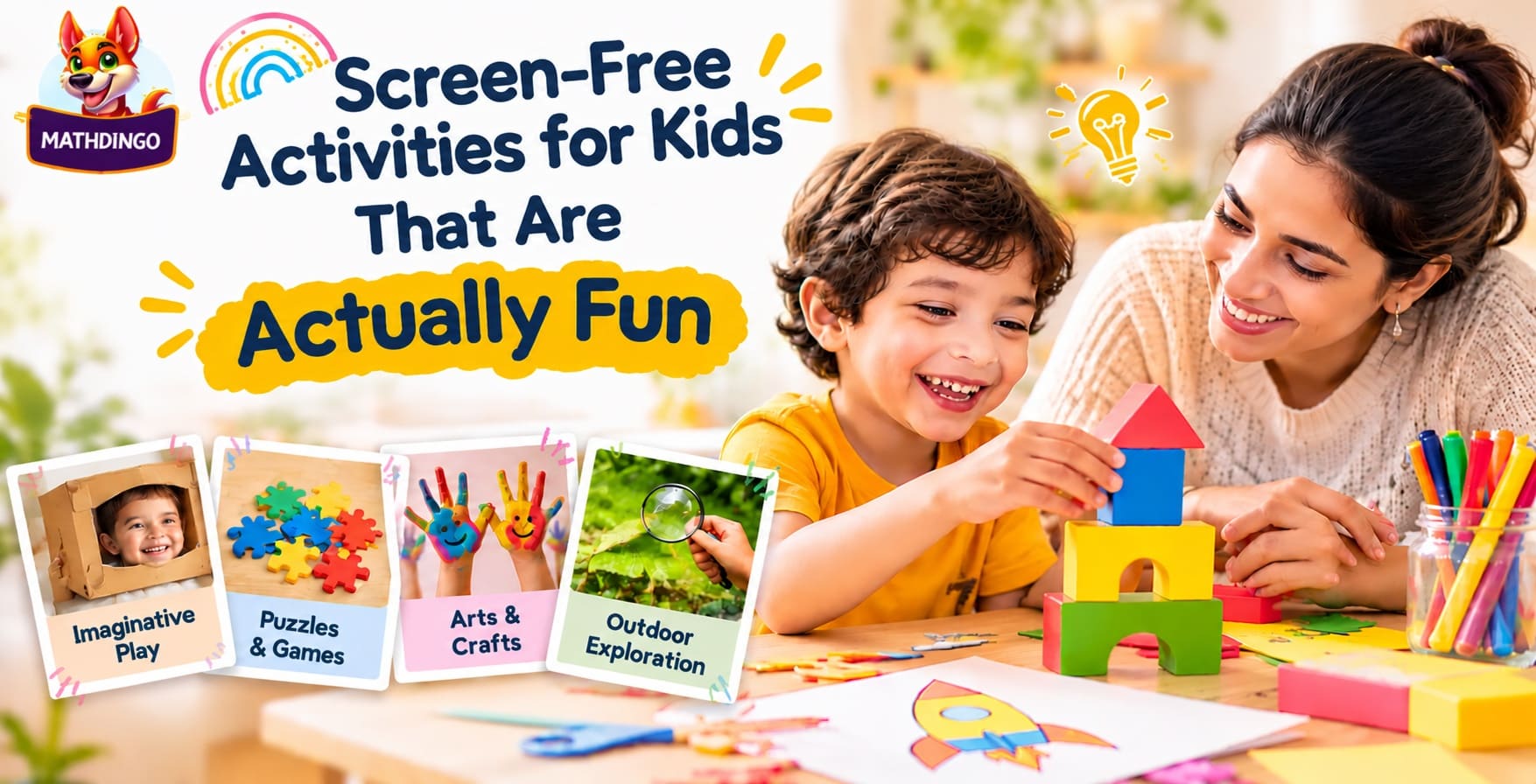
10 Screen-Free Activities for Kids That Are Actually Fun
Looking for screen-free activities for kids that don’t require a complicated setup? Try these simple ideas using things you probably already have at home.
1. Build a Blanket Fort
A few blankets, cushions, and chairs can become your child’s favourite little hideaway. Let them turn it into a secret cave, cosy reading corner, or pretend home. Don’t worry about making it perfect—half the fun is building it together.
2. Organise a Treasure Hunt
Hide a favourite toy or a few household objects and give your child clues to find them. Their excitement with every discovery makes this simple game feel like a real adventure.
3. Try DIY Art and Craft
Bring out paper, crayons, cardboard, glue, and child-safe craft supplies. Let your child create whatever they imagine, even if it looks nothing like the original idea. The joy is in making it themselves.
4. Create an Indoor Obstacle Course
Use cushions, chairs, and open spaces to create a course where children can jump, crawl, balance, and move. A little laughter and movement can turn a restless afternoon around.
5. Play Pretend Games
Play shopkeeper, teacher, chef, doctor, or explorer. Follow your child’s imagination and let them take the lead. You might be surprised by the stories and ideas they come up with.
6. Make Up a Story Together
Begin with a funny or magical sentence and take turns adding to the story. It could be about a flying elephant, a lost dinosaur, or a little rabbit who discovers a secret door.
7. Explore Simple Kitchen Activities
Invite your child to wash vegetables, mix ingredients, arrange fruit, or help prepare a simple snack with your supervision. Small tasks can make children feel included, capable, and proud.
8. Play Puzzles and Board Games
Choose puzzles, memory games, card games, or board games suited to your child’s age. Enjoying the game together matters more than winning
9. Go on a Nature Scavenger Hunt
Step outside and look for leaves, flowers, birds, interesting shapes, or different textures. Give your child a little checklist and let curiosity lead the way
10. Try Fun Maths Activities
Count toys, build block towers, sort objects by size or colour, create patterns, or try simple number challenges. These fun maths activities help children discover that maths isn’t just something in a workbook—it can be part of everyday fun
Screen-Free Activities Based on Your Child’s Age
Children enjoy different kinds of play as they grow. What keeps a toddler busy for ten minutes may not interest a school-age child, so choosing activities that match their age and abilities can make screen-free time easier
| Age | Fun activities to try |
| Toddlers (2–3 years) | Stacking blocks, colouring, sensory play, sorting objects |
| Preschoolers (3–5 years) | Pretend play, simple crafts, treasure hunts, puzzles |
| School-age kids (6–10 years) | Board games, building challenges, nature hunts, DIY projects |
Choose activities based on your child’s interests and abilities. Supervise younger children, especially around small objects, scissors, and craft materials.
How to Make Screen-Free Time Easier for Parents
You don’t have to become your child’s full-time entertainer. A few simple habits can make screen-free moments easier for the whole family.
- Give them a choice: Offer two activities and let your child decide. A little independence can make them more excited to begin.
- Keep an activity basket ready: Store crayons, puzzles, blocks, cards, and craft supplies together for easy access
- Start with just 10 minutes: You don’t need a long activity session. Let the fun grow naturally
- Don’t rush to fix boredom: Give your child time to come up with their own ideas
- Enjoy it together: Join the play for a little while, laugh, create, and then let your child continue independently
Creating a simple daily routine can also help children balance screen time, play, and learning. Read our guide on how to build a daily learning routine for your child for more ideas to make learning a natural part of everyday life.
Make Screen-Free Learning Fun with Hands-On Activities
Some of the most meaningful learning happens when children don’t even realise they’re learning. Counting blocks, recognising patterns, solving puzzles, and exploring shapes can turn playtime into little learning moments.
Simple activities can also help children develop early writing skills. Explore our guide to why writing practice is important for young children for easy ways to encourage writing at home through fun, everyday activities.
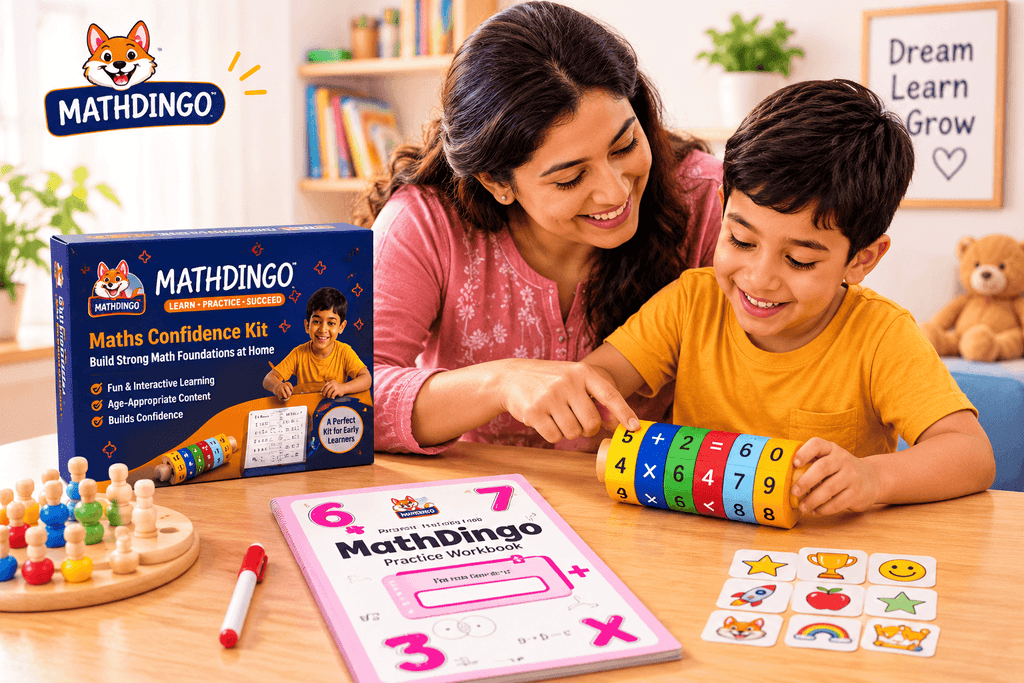
Parents looking for more engaging ways to introduce maths at home can explore a maths activity kit for kids or a maths kit for children featuring flashcards, puzzles, workbooks, and hands-on activities. These resources can help children practise number recognition, logical thinking, and problem-solving while keeping learning playful.
Choose activities that let your child explore freely, make mistakes, try again, and celebrate small achievements. A little encouragement can make a difference in how confidently they approach something new.
Frequently Asked Questions
Kids can build forts, draw, play puzzles, make crafts, go on treasure hunts, play pretend games, help with simple cooking, or explore outdoors. Give them a few options and let them choose what sounds fun.
Offer a few age-appropriate choices, keep simple play materials within reach, and allow your child to explore at their own pace. You don’t need to organise every minute. Sometimes children just need a little time to get started.
Blanket forts, indoor obstacle courses, DIY crafts, board games, storytelling, sorting games, and fun maths challenges are easy activities to try at home with everyday materials.
The right balance depends on your child’s age, needs, and family routine. Aim for a healthy mix of play, movement, creativity, reading, outdoor experiences, rest, and time together.
Conclusion: Little Moments Make a Big Difference
You don’t need to plan the perfect activity or fill every afternoon with something special. Sometimes, the best memories begin with a few cushions on the floor, colours scattered across a table, or your child proudly showing you something they made all by themselves.
Put out a few simple things, give them room to imagine, and join in when you can. These little moments of laughter, discovery, and togetherness are what make childhood special—and you may find that screen-free time becomes something your child looks forward to, rather than something they have to do.
Have a Question?
Leave your details below and our team will get back to you.