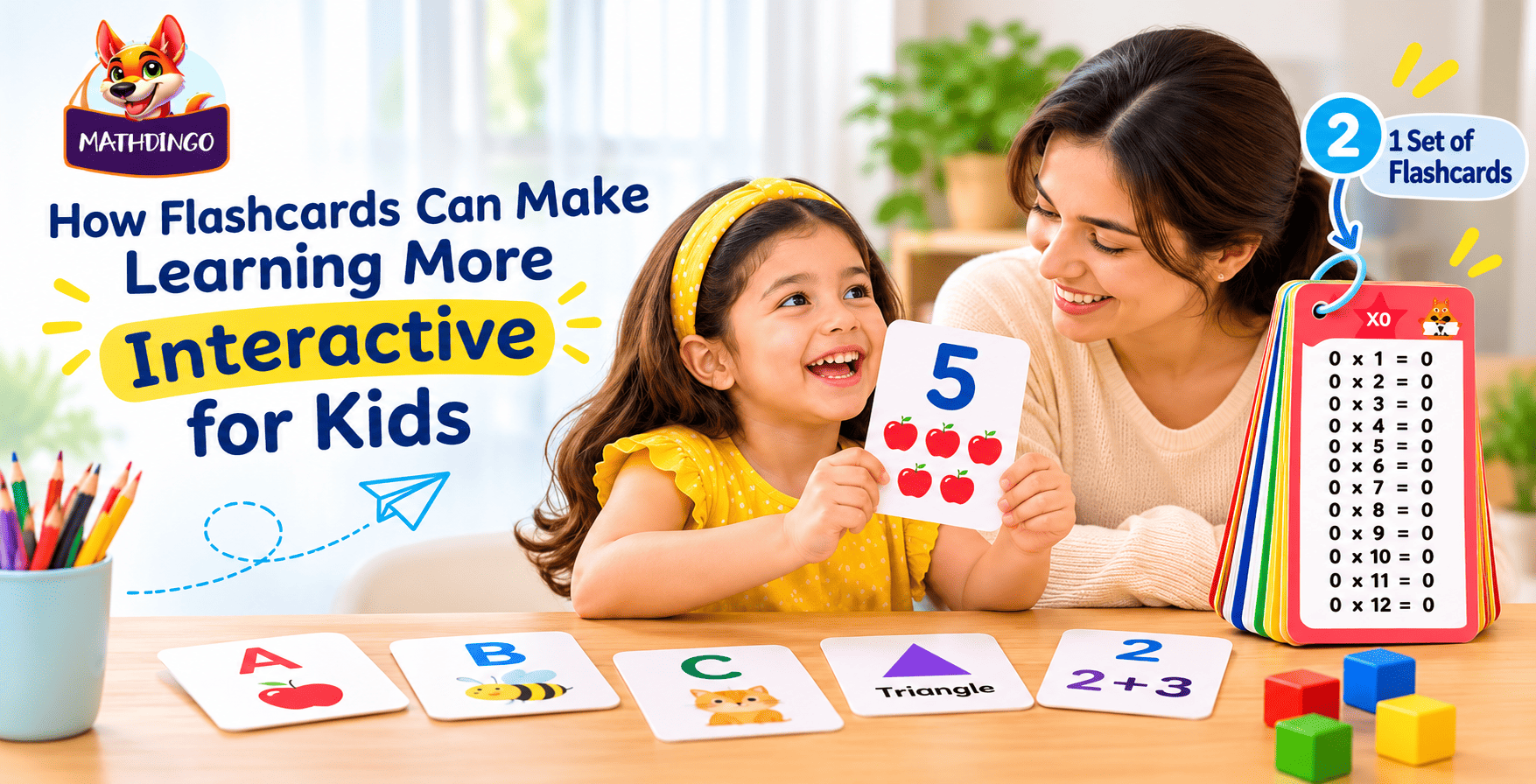
Have you ever sat beside your child with a workbook, hoping to finish just a few activities, only to find their attention drifting after the first couple of questions? If this sounds familiar, you’re certainly not alone. Many parents want to make learning enjoyable, but finding activities that keep children interested isn’t always easy.
Sometimes, a small change can make all the difference. A colourful flashcard, a simple question or a little guessing game can turn an ordinary learning moment into something your child actually looks forward to. Flashcards make learning more interactive by encouraging children to recall information, answer questions, recognise pictures and participate in educational games. They give children opportunities to think, respond and enjoy learning rather than simply reading or listening.
Let’s explore the benefits of flashcards for kids and how you can use them to make everyday learning more enjoyable.
What Makes Flashcards Useful for Children?
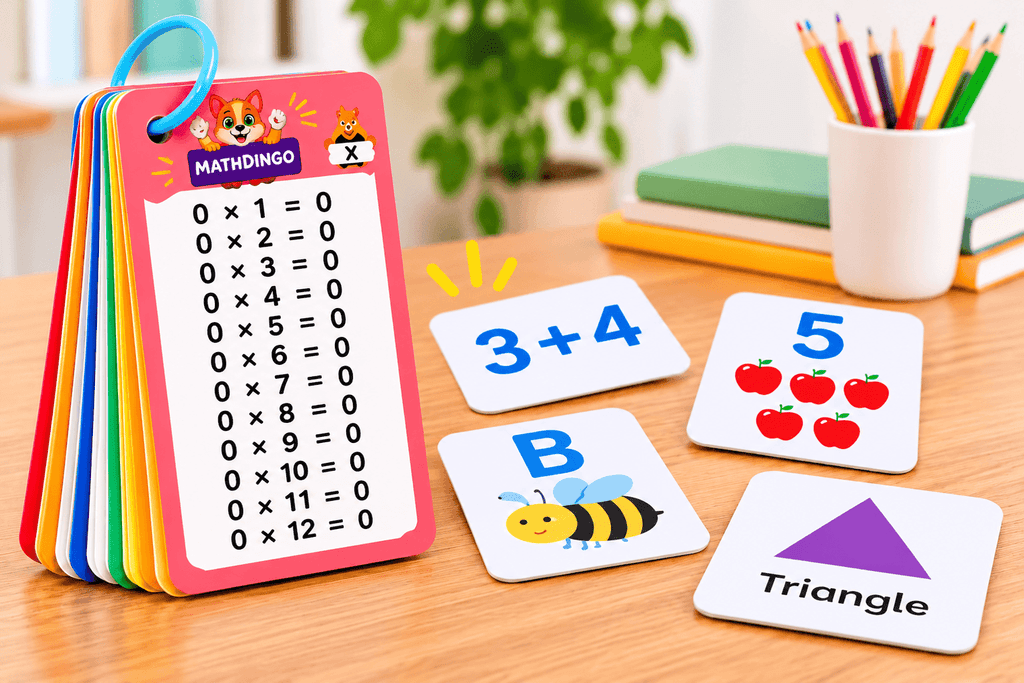
Flashcards are simple learning cards that usually show a picture, word, number or question on one side and an answer or explanation on the other. They come in many forms, including alphabet cards, number cards, vocabulary cards, picture cards and maths flashcards.
Their biggest advantage is how easy they are to use. You don’t need a complicated lesson plan or lots of preparation. Pick a few cards, ask your child a question and let them explore the answer. This simple approach can make learning feel more like play.
7 Ways Flashcards Make Learning More Interactive
1. Children Get to Think, Not Just Listen
Flashcards invite children to look, think and respond. Instead of passively listening to an explanation, they have a chance to remember an answer for themselves. For example, show your child a number 6 card and ask them to find six toys or blocks. They are practising number recognition while actively taking part.
2. Ordinary Practice Becomes a Game
A simple question can quickly become a playful challenge. Show an animal card and ask your child to name the animal or make its sound. With maths cards, you could ask them to solve a small addition question. Adding a little fun can make practice feel less like a task.
3. Pictures Make New Ideas Easier to Understand
Young children often respond well to visual examples. A card showing three apples, for instance, can help connect the written number 3 with a quantity they can see and count. Pictures give children another way to understand and remember new ideas.
4. Repeated Practice Helps Children Remember
Children benefit from revisiting what they have learnt. Flashcards make it easy to return to familiar letters, numbers or words without repeating a whole worksheet. Mix a few known cards with some new ones to keep practice manageable and varied.
5. Small Achievements Build Confidence
Recognising a number or answering a question that once felt difficult can give a child a real sense of achievement. Notice their effort, encourage them to have another go when they make a mistake and celebrate progress. These small moments can help build a positive attitude towards learning.
6. Learning Becomes a Shared Activity
Flashcards create opportunities for parents and children to learn together. Take turns asking questions, make up silly clues or talk about the pictures. A few minutes of shared practice can become a lovely way to connect while supporting your child’s learning.
7. Children Gradually Learn to Practise Independently
Once children become familiar with the cards, they may enjoy sorting them, choosing their favourites or testing themselves. You can encourage them to set aside the cards they find tricky and revisit them together later. This helps them take a more active role in their own learning.
How to Use Flashcards Across Different Subjects
You can also combine word and alphabet flashcards with writing practice for young children to help them recognise letters, become familiar with simple words and build early writing skills
- Maths: Use number cards for counting, number recognition, shapes and simple addition.
- English: Alphabet and word cards can help children recognise letters, build vocabulary and become familiar with simple words.
- Science: Picture cards featuring animals, plants, body parts and everyday objects can introduce new topics.
- General knowledge: Use questions and pictures to explore familiar topics and encourage children to share what they know.
- Colours and shapes: Ask children to sort cards, spot patterns or find objects around the home that match a colour or shape.
A Simple Maths Flashcard Game to Try at Home
Choose a number 5 flashcard and ask your child to find five objects, such as toy cars, pencils or building blocks. Count the objects together and match them to the number on the card. Once your child is comfortable, try another card or ask them to add one more or take one away. You can make the activity easier or more challenging depending on your child’s age and ability.
5 Fun Flashcard Activities for Kids
Flashcard games are also a great addition to other screen-free activities for kids that make learning enjoyable and encourage creativity at home
Matching Game
Place a few cards face up and ask your child to match pairs, such as a picture with its word or a number with the matching quantity.
Guess the Answer
Give your child a clue and let them choose the card that matches it. For example, “I am yellow and shine in the sky.”
Flashcard Treasure Hunt
Hide a few cards around the room and ask your child to find them. When they discover a card, invite them to answer the question or describe the picture.
Beat Your Previous Score
Choose a small set of cards and see how many your child can answer. Keep the focus on improving their own previous effort rather than competing with someone else.
Make Your Own Cards
Encourage your child to draw pictures, write letters or create simple number cards. Making the cards can be a learning activity in itself.
How to Choose the Right Flashcards for Your Child
Choose cards that suit your child’s age, interests and current learning level. Look for clear pictures, readable text and topics that are relevant to what they are learning. Cards should offer a little challenge without feeling too difficult. If your child enjoys animals, colours or numbers, choosing cards around those interests can help them feel more engaged.
Parents who want to explore more hands-on learning resources can also consider a maths learning kit that combines flashcards, workbooks and other educational activities. These materials give children different ways to practise numbers, explore simple calculations and develop problem-solving skills.
A Few Tips to Make Flashcard Practice Enjoyable
- Start with a small handful of cards rather than showing too many at once.
- Keep practice sessions short and finish while your child is still interested.
- Let your child choose some of the cards or games.
- Mix familiar cards with a few new ones.
- Encourage effort and curiosity instead of expecting every answer to be correct.
- Use games and conversation so practice does not feel like a test.
- Take a break when your child has had enough; you can always return to the cards another day.
Frequently Asked Questions
Flashcards encourage children to look, recall information, answer questions and take part in games. This makes them active participants rather than simply listening or reading.
Yes. Choose simple cards with clear pictures, familiar words or basic numbers. Keep activities short and adapt them to your child’s age and attention span.
There is no single routine that suits every child. Short, relaxed sessions a few times a week can be a useful starting point. Follow your child’s interest and avoid making practice feel like a chore.
Flashcards can support memory by giving children opportunities to recall and revisit information. Mixing familiar cards with new ones can help keep practice useful and engaging.
Yes. Maths flashcards can be used to practise number recognition, counting, shapes and simple calculations. Pairing a card with real objects, such as blocks or toys, can make the activity more hands-on.
Make Everyday Learning a Little More Playful
Learning does not always have to mean sitting down with a book or completing a worksheet. Sometimes, a colourful card, a thoughtful question and a few minutes of conversation are enough to spark a child’s curiosity.
Flashcards offer a simple way to practise, play and share small learning moments together. Your child does not need to master everything in one day. Give them room to explore, celebrate the little wins and enjoy the process. Pick a few cards, sit together and see where their curiosity takes you.
Have a Question?
Leave your details below and our team will get back to you.